Wednesday, February 11, 2015

DIY Brine shrimp (or Artemia) hatchery

Introduction
Brine shrimp (or Artemia salina) is a crustacean used as a food source for fry and fish. In a zebrafish facility, brine shrimp is used as a intermittent feed for the fry and adults. Shrimp hatchlings at less than two days old contain yolky reserve rich in nutrients for fry and adult fish (feeding them artemia increases better egg production in females).

Materials
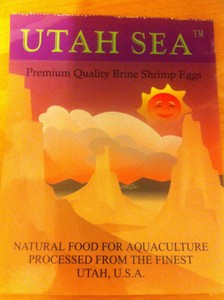
  • Brine shrimp eggs. Don't get those decapsulated eggs that will not hatch BUT used directly to feed fish instead. For bulk order, you can visit BrineShrimpDirect (I have not dealt with them so any question do contact them directly). In eBay, the cost is  about SGD 2.20 per 10 g of eggs. Normally, I will use 2 tbsp per 1 litre sea salt water and allow it to hatch overnight with aeration.
Brine shrimp eggs from eBay seller fishmanofrobertsbridge.

Sea salt from eBay seller timholliday.

  • Shrimp hatchery set. You can DIY by using a Coca Cola 2 liter bottle, aquarium tubing, and plastic hollow balloon sticks (see fig below).

 
DIY brine shrimp hatchery. Instead of having a nozzle at the bottom to drain out the hatched shrimp, I prefer using the balloon stick connected to tubing to siphon off the shrimps from the vessel. That way, I will not be collecting unhatched eggs settled to the bottom as I would by using the bottom outlet (in commercial setting). 

Once the unhatched eggs are settled to the bottom and the empty cyst floating at the surface, I would usually use the hollow stick/straw connected to tubing to siphon out the shrimp (indicated red). A muslin cloth is normally used to net the shrimp and added back to fish water (at a reduced salt concentration) before feeding.

Different stages of maturity of the brine shrimps. New hatchlings are preferred due to their high yolk content, whereas older shrimps might have loss some yolky storage. The unhatched eggs are shown here.


 For commercial hatchery, you can search for them from eBay. Just key in brine shrimp hatchery and you will get returns.

Notes
  • Hatching the eggs is good for maximum three days. After that, the shrimp will lose its yolk reserve and would also have lost their nutritious value. If you need to keep shrimp for more than three days, it is best to feed the brine shrimp in order to keep them alive.
  • Don't feed too much shrimp to your fish because this food is considered fatty. Feed the fish once per day and add in dry food for the other two feeding per day (total 3 feeding).
  • Fish will always be hungry. So, don't allow demand feeding because there will always be demand. Fish will die of obesity-related complications!
DIY material

Hollow balloon sticks (get white ones if preferred). Fig from www.balloonsandweights.com.


Muslin cloth or cloth coffee filter (you can get this from Aliexpress or shops)


Wednesday, February 4, 2015

In vitro cell culture changes epigenetic marks

This study demonstrates that cell culture could change the epigenetic mark of cells taken from tissues. In this paper, the 5hmC marks reduced drastically after plating mouse fibroblast taken from mice.  The factors involved are reduced Tet protein expression (important for modifying 5- methylcytosine to 5-hydroxymethylcytosine), which is responsive to environmental changes and loss of cofactors important for Tet activity.

Friday, October 31, 2014

Protein concentration, membrane based, Molecular Weight Cutoff aka Nominal Molecular Weight Limit

Protein concentrator based on membrane and centrifugation works by removing biomolecules at determined molecular size/weight. For example, a membrane-based protein concentrator such as Centriprep Centrifugal Filter Unit with Ultracel-50 membrane (Merck Millipore cat# 4311) has a protein cutoff point at 50 kDa. The term used can be  Molecular Weight Cutoff (MWCO; refer to Wikipedia) or Nominal Molecular Weight Limit (NMWL) but they mean similar thing, that proteins at or above 50 kDa is trapped/concentrated whereas molecules at <50 be="" br="" kda="" removed.="" will="">

Abstract

Writing abstract
If writers are able to conceive the detail of the abstract prior to writing other parts of a paper, thesis etc., it will be of great help. Abstracts can be considered as a mini-thesis (at around 100 words).

It should contain the following information:
  • What was done/what are the findings?
  • The reason?
  • The method?
  • The results?
  • The significance of finding?

References
Writing an abstract (link)

How to go about hard binding thesis in NTU Singapore

At last, finished my PhD defense and on the way to hard bind my thesis. Although NTU Library no longer collect hard copy theses, NTU schools still collect them for archiving. So, I need to prepare these hard copies.

To have my thesis bound in hard cover, I had to do it at the NTU library printing station (Campus Supplies Pte Ltd). The printing station is equipped with plethora of printers, scanners, and photocopiers. The payment method can be made via Ezlink. The shop was well equipped to cater to students, staffs and lecturers' needs.

One thing I didn't really fancy in the place. Not all staff is friendly. They are not rude, but they aren't welcoming and friendly. What a shame. The whole affair was very terse and impatient. Fortunately, not all the staff are like that. I guess their mundane work and the lack of friendlier and conducive environment sort of transformed them into zombie-like.

Anyway, the cost for hard binding a thesis is SGD 18. For two theses, it costs SGD 34. There is a submission date and a collection date (which is a week after submission). The theses are sent to a binder and collected in a week's time.

Alternatively, students can also contact another shop providing the above service, e.g. Ultra Supplies at Queensway. I have not contacted them because the place is far from NTU and probably nearer to students staying near NUS.

Contact
Ultra Supplies
No. 1 Queensway Office, #03-38/39
Main Service Counters, #03-37/45
Queensway Shopping Centre
Singapore 149053
Tel: 64796074
Fax: 64750845

For friendly assistance, call
Philip at 90214846
Kevin at 90216062

Campus Supplies Pte Ltd
Lee Wee Nam Library NTU
Tel: 67935980
Email: campusntu@campus-supplies.com

Mailing address:
Kent Ridge P. O. Box 1053
S911102

If given the chance, I would like to try dealing with Ultra Supplies and compare the service standard with that of Campus Supplies Pte Ltd. This is considering that the business card of the former included the description "for friendly assistance, call". That's a strange way to assure customers of friendly service. I would have expected all staffs should be friendly rather than assigning certain staffs as friendly...

Strange thought.
Tuesday, September 16, 2014

Ligation independent cloning

I was following Nick Oswald's approach for ligation independent cloning (LIC) until I realized that his method can't really work. The reference to the original work that he linked to was okay and should be adhered to. I think Nick's method failed because he was thinking of adding a start codon and several bases just to bring up the number of bases to at least 15 bases of "overlap" (the N-term amino acid MRRGAP). However, when you studied the bases that he used in the example (I'm guessing that the method he showed was just a proof-of-concept, without any empirical value), one big problem arises.

The %GC content is extremely high (at 78.8% GC). This will proof to be a downfall because whenever users want to design primers that incorporate termini that is complementary to the LIC sequence, they will realize that the homo-dimerization will be a big problem (homodimer delta G = -22.78 kcal/mole). That is just for the forward primer with 5' extension of TGCGGCGTGGCGCGCCGCAA. This alone is already a big headache to many people. Another major problem is that there is a hairpin problem. The formation of hairpin is very likely! Imagine what will happen if more gene-specific bases are added to the bases already prone to hairpin formation...


I don't understand why Nick's approach requires incorporation of start codon. If LIC cloning is really versatile, addition of ATG to the sequence after the LIC complementary termini should be a breeze. 

I have made the vector with the LIC sequence, but I'm afraid I'm stuck with the primer design and PCR steps. I wished I had studied Nick's method in detail before embarking on the DNA vector construction. This entry is just to warn others to read Nick's approach with caveat. My advise is that if you want to incorporate LIC sequence, refer to this paper.

Friday, August 22, 2014

Definition my friend, without definition I can't understand you

In written work, please provide sufficient (if not redundant) amount of definition/explanation of terms used in the writing. If a writer fails to do so, it will be very difficult for readers to understand what you are trying to say.

In a conversation, at least when the listener can't understand a term/expression introduced into the speech, he/she can still stop the speaker on his/her track to ask about the ambiguous or foreign term (or expression) just used.

So, when someone is talking about "input tax", "residual supplies, claim, and "De Minimis Rule", a Science person like me only hear tax input, what supply leftover, claim, minimal rule, what? It make no sense.